


Mastering Industrial Floor Marking: 3 Essential Steps for Long-Lasting Adhesion
- Albert Chilat

- Jul 14
- 2 min read
In fast-paced industrial environments, floor marking tape is your silent partner in safety and workflow efficiency. Yet, we frequently see facilities struggling with tape that curls, peels, or fades within weeks of application. This isn't just a nuisance—it’s a costly drain on your maintenance budget and a potential hazard for your team.
At 5S Industrial Flooring LTD, our extensive experience across UK warehouses has proven one thing: the secret to permanent adhesion isn't just the tape you choose; it’s how you prepare the floor.
To ensure your marking stays put and keeps your facility HSE-compliant, follow these three proven prep steps.
1. Thorough Substrate Cleaning
Think of your floor like a canvas. If the surface is dusty, oily, or covered in residual grime, your tape has nothing to bond to. Surface contaminants create a microscopic barrier that prevents the adhesive from "wetting out" and gripping the floor.
The Fix: Use an industrial-grade degreaser to remove oils, grease, and chemical spills. Follow up by sweeping or vacuuming to ensure all loose dust and grit are gone.
Pro Tip: If the floor has been previously treated with a sealer, test a small, inconspicuous area to ensure the tape adhesive is compatible with the finish.
2. Moisture Checks
Concrete is porous, and moisture can be your adhesive’s worst enemy. Trapped moisture—whether from humidity, cleaning, or hydrostatic pressure—will weaken the bond over time, leading to premature lifting.
The Fix: Verify the Relative Humidity (RH) levels in your facility. If you have recently cleaned the area, ensure it is completely dry before application.
The Test: Perform a simple moisture test. If the surface feels cool or looks slightly darkened, it likely needs more time to dry. Don't rush this step; trapped moisture is the leading cause of "ghosting" or adhesive failure on warehouse floors.
3. Temperature Control
Adhesives are temperature-sensitive. If the floor is too cold, the adhesive becomes brittle and loses its initial tack. If the floor is too hot, the adhesive can become too soft, failing to provide the structural support needed for heavy-duty traffic.
The Fix: Always check the technical data sheet for your specific tape. Apply your marking within the manufacturer’s recommended temperature range.
The Environment: If you are applying tape during winter months in unheated areas, use a portable heat source or heat gun to gently warm the floor surface to the recommended application temperature before laying the tape.
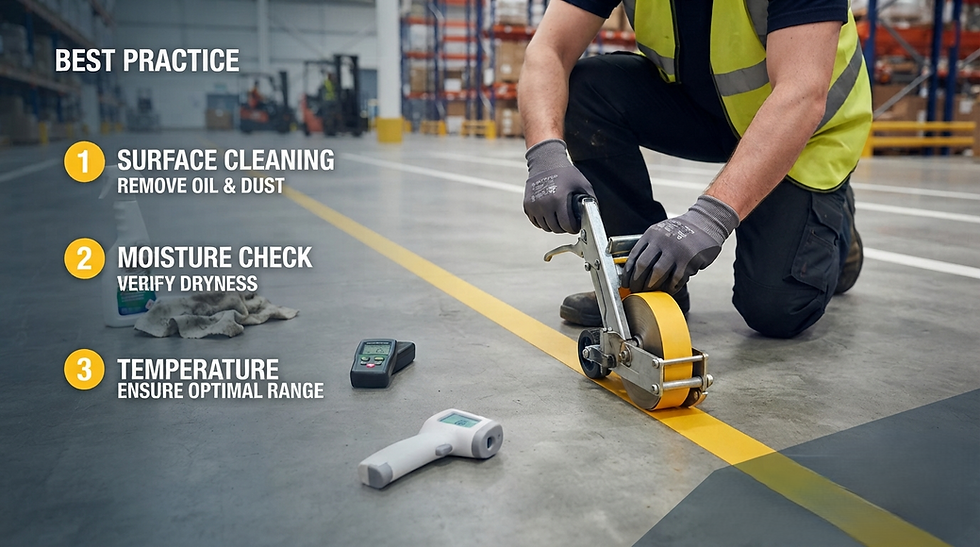
3 Steps best practice
Why Prep Matters
Skipping these steps might save you an hour today, but it often leads to repeat interventions that cost you thousands in labor and material replacement over the year. Proper site preparation not only protects your investment but also ensures that your health and safety markings remain clear, durable, and fully compliant with HSE standards.
Need a helping hand?
We understand that every warehouse floor is unique, and getting the prep right the first time is crucial for long-term success.


Comments