


Enhancing Workplace Safety with Professional Floor Marking
- Albert Chilat

- Dec 30, 2025
- 4 min read
Updated: Mar 3
Understanding the Importance of Floor Marking
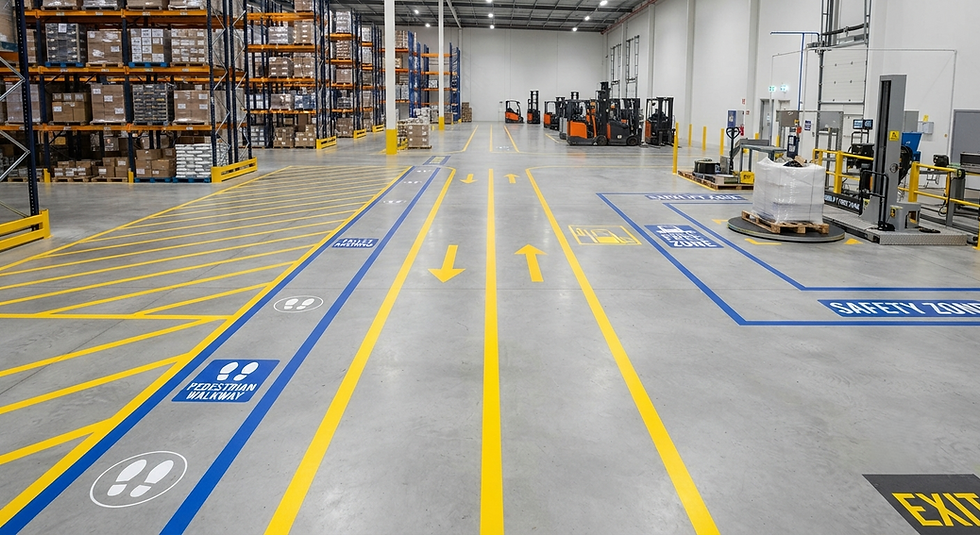
Floor marking involves using paint, tape, or other materials to create visual cues on the ground. These markings serve various purposes, including:
Guiding Movement: Clearly defined paths help direct foot and vehicle traffic, reducing the risk of collisions.
Identifying Hazards: Markings can indicate areas that require caution, such as wet floors or equipment zones.
Designating Spaces: Specific areas can be marked for storage, equipment, or personnel, ensuring organized and efficient use of space.
The Impact of Poor Floor Marking
Inadequate or unclear floor markings can lead to confusion and accidents. For instance, a warehouse without clear pathways may result in employees inadvertently walking into the path of moving forklifts. According to the National Safety Council, slips, trips, and falls account for a significant percentage of workplace injuries. Proper floor marking can help mitigate these risks.
Types of Floor Marking Solutions
When considering floor marking options, businesses have several choices. Here are some popular solutions:
1. Painted Markings
Paint is a traditional and durable option for floor marking. It can be applied in various colours and patterns to convey different messages. For example:
Yellow Lines: Often used to indicate walkways or caution areas.
Red Lines: Typically signify danger or restricted zones.
Green Lines: Can indicate safe areas or emergency exits.
2. Vinyl Floor Tape
Vinyl tape is a versatile and easy-to-apply alternative to paint. It is available in various colours and widths, making it suitable for different applications. Benefits of vinyl tape include:
Quick Installation: Tape can be applied quickly, minimising downtime.
Flexibility: It can be easily removed or repositioned as needed.
Durability: High-quality vinyl tape is resistant to wear and tear.
3. Pre-Made Floor Signs
For specific messages, pre-made floor signs can be an effective solution. These signs can indicate hazards, directions, or instructions. They are particularly useful in high-traffic areas where quick communication is essential.
Implementing a Floor Marking Strategy
To effectively enhance workplace safety through floor marking, consider the following steps:
Step 1: Assess Your Space
Begin by evaluating your workplace layout. Identify high-traffic areas, potential hazards, and locations where clear markings would improve safety.
Step 2: Choose Your Marking Solutions
Based on your assessment, decide which floor marking solutions best suit your needs. Consider factors such as durability, visibility, and ease of application.
Step 3: Involve Employees
Engage your employees in the process. Their insights can help identify areas that require attention and ensure that the markings are practical and effective.
Step 4: Regular Maintenance
Once your floor markings are in place, establish a routine for maintenance. Regularly inspect the markings for wear and tear, and refresh them as needed to maintain visibility.
Case Studies: Successful Floor Marking Implementation
Case Study 1: Manufacturing Facility
A manufacturing facility faced frequent accidents due to unclear pathways. After implementing bright yellow painted lines to designate walkways and red lines for hazardous areas, the facility reported a 30% reduction in accidents within six months. Employees felt more confident navigating the space, leading to improved productivity.
Case Study 2: Warehouse
A large warehouse struggled with organisation and efficiency. By using vinyl floor tape to create designated storage areas and clear pathways, the warehouse improved its inventory management. The result was a 25% increase in order fulfilment speed, demonstrating that safety and efficiency can go hand in hand.
Training and Awareness
Implementing floor marking is only part of the solution. Training employees on the significance of these markings is crucial. Consider the following strategies:
Safety Meetings: Regularly discuss the importance of floor markings during safety meetings.
Visual Aids: Use posters or digital displays to reinforce the meaning of different markings.
Hands-On Training: Conduct training sessions where employees can practice navigating the marked areas.
The Role of Technology in Floor Marking
Advancements in technology are also influencing floor marking strategies. For instance, some companies are using augmented reality (AR) to visualise floor markings before implementation. This allows businesses to experiment with different layouts and designs, ensuring the most effective solution is chosen.
Future Trends
As workplace safety continues to evolve, we can expect to see more innovative floor marking solutions. Smart floor markings that change colour based on conditions (e.g., wet surfaces) or integrated sensors that alert employees to hazards are just a few possibilities on the horizon.
Conclusion
Enhancing workplace safety through professional floor marking is a practical and effective strategy. By implementing clear and visible markings, businesses can reduce accidents, improve organisation, and foster a safer work environment. As you consider your own workplace, take the time to assess your needs, choose the right solutions, and engage your employees in the process. Remember, a safer workplace is not just about compliance; it’s about creating a culture of safety that benefits everyone.
Take the first step today by evaluating your current floor marking strategy and exploring how you can improve it for a safer tomorrow.
For more information on how to enhance workplace safety, visit 5S Industrial Flooring LTD.


Comments