


The Role of Floor Markings in Compliance and safety
- Albert Chilat

- May 5
- 3 min read
Floor tape and signs aren't just about keeping things neat; they are often legal and regulatory requirements.
OSHA & HSE Standards: Regulatory bodies globally require employers to clearly mark permanent aisles and passageways. For instance, OSHA standard 1910.22(c) explicitly states that "covers and/or guardrails shall be provided to protect personnel from the hazards of open pits, tanks, vats, ditches, etc." and that walk zones must be clearly defined.
5S Methodology: In Lean manufacturing, the "Set in Order" phase relies heavily on floor markings to designate exactly where tools, pallets, trash cans, and machinery belong. This reduces waste, search times, and clutter.
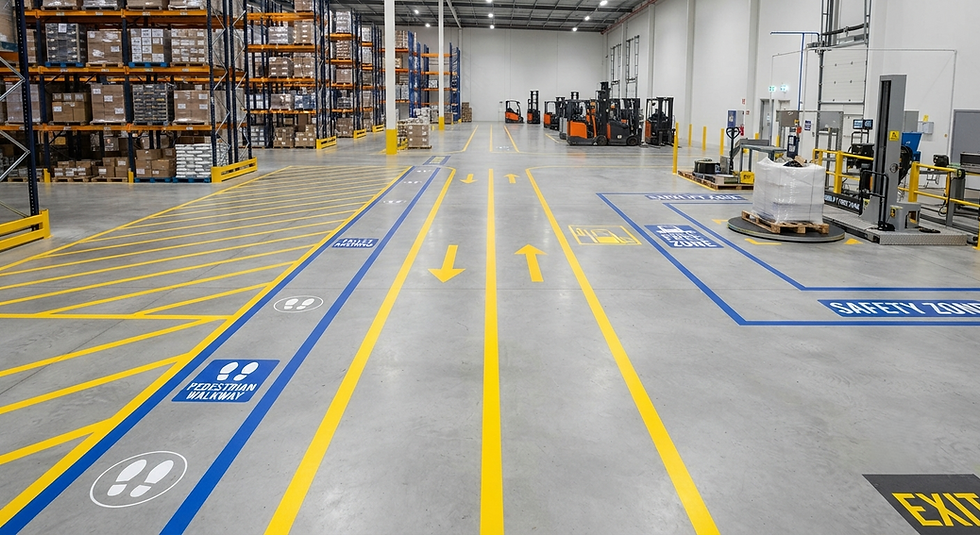
Pedestrian vs. Vehicle Segregation: One of the highest-risk scenarios in any warehouse is the interaction between pedestrians and heavy machinery (like forklifts). Brightly color-coded walkways and warning signs keep these two flows completely separate.
The Industrial Floor Marking Color Code
To ensure universal understanding across your facility (and to comply with international best practices), you should adopt a standardized color-coding system. The standard industry color code includes:
Tape/Sign Color | Designates | Example Applications |
Yellow | Aisles, traffic lanes, and work cells | Forklift pathways, pedestrian boundary lines. |
Red | Defects, scrap, or danger/stop areas | Red tag zones, fire extinguisher clearance areas. |
Orange | Materials or equipment held for inspection | Quality control holding areas, incoming inspection zones. |
Green | Safety equipment or first aid | Eye wash stations, first aid kits, safety showers. |
Blue | Raw materials or works-in-progress | Material staging areas, assembly line queues. |
Black/Yellow Diagonal | Physical hazards or areas to keep clear | Electrical panels, low clearance areas, stair edges. |

Tape vs. Painted Markings: Which is Best?
When implementing floor markings, facility managers generally choose between heavy-duty industrial tape and painted lines.
Industrial Floor Tape (The Modern Standard)
Modern PVC or polyester industrial tapes (often featuring beveled edges to resist forklift scrapes) have largely replaced paint in fast-paced facilities.
Pros: Installs instantly with zero cure time (no downtime); easy to change if your layout reorganizes; highly visible with crisp, clean lines; resistant to chemicals and heavy traffic.
Cons: Can eventually peel or tear under extreme "pivoting" traffic (like forklift wheels turning in place on top of the tape).
Painted Lines
Pros: Better for extremely rough or textured concrete surfaces where tape might not adhere perfectly.
Cons: Requires significant downtime to cure; fumes/VOCs during installation; lines chip, fade, and look dirty quickly; incredibly difficult to remove or change when workflows evolve.
Projected LED Floor Signage: The Future of Industrial Compliance
In high-traffic areas, even the toughest tape or paint will eventually wear away. To combat this, many modern facilities are turning to projected LED floor signage.
Using heavy-duty overhead projectors, safety signs (like "Stop," "Forklift Traffic," or "Keep Clear") are projected directly onto the floor.
Zero Wear and Tear: Because the sign is made of light, it can never chip, scratch, or peel.
Dynamic Warning Systems: Some projected systems can be linked to motion sensors. For example, when a forklift approaches an intersection, a "STOP" sign flashes on the floor to alert pedestrians in real-time.
High Visibility: Projected signs cut through dust, grime, and low-light environments much better than physical tape.
4 Tips for Installing Floor Markings That Last
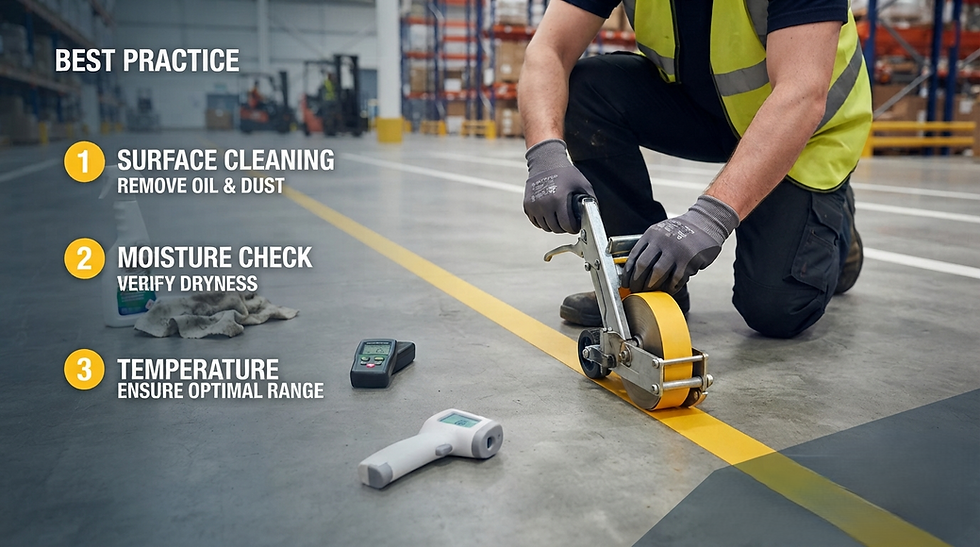
If you opt for physical tape or signage, proper installation is key to ensuring they don't peel up within a week:
Deep Clean the Floor First: Tape will not stick to dust, oil, or chemical residue. Clean the area with an industrial degreaser, rinse, and let it dry completely before applying.
Use a Roller: Once the tape is down, apply heavy pressure using a tape roller or by driving a heavy forklift tire over the lines. This activates the pressure-sensitive adhesive.
Opt for Beveled Edges: When buying tape, look for heavy-duty options with beveled edges. This design allows forklift wheels to roll right over the tape rather than catching and tearing the edge.
Use "L", "T", and "Plus" Corners: Instead of trying to tape continuous boxes around pallet bays, use pre-cut tape corners (Ls, Ts, and dots). They are faster to install and are far less likely to get caught and damaged by sliding pallets.

Comments