


UK Compliant Floor Marking: Ensuring Safety and Efficiency in Your Facility
- Albert Chilat

- Feb 17
- 4 min read
When you manage a warehouse, manufacturing facility, or any industrial business, safety and efficiency are top priorities. One of the most effective ways to achieve both is through proper floor marking. In the UK, adhering to Health and Safety Executive (HSE) guidelines is essential. This blog post will guide you through everything you need to know about UK compliant floor marking and how it can transform your workplace.
Why UK Compliant Floor Marking Matters
Floor marking is more than just painting lines on the ground. It is a strategic tool that helps organise your workspace, reduce accidents, and improve workflow. When done according to UK standards, floor marking:
Enhances safety by clearly defining walkways, hazardous zones, and storage areas.
Boosts productivity by guiding employees and visitors efficiently through the facility.
Supports compliance with legal requirements, avoiding costly fines and shutdowns.
Facilitates 5S implementation, a lean manufacturing methodology focused on workplace organisation.
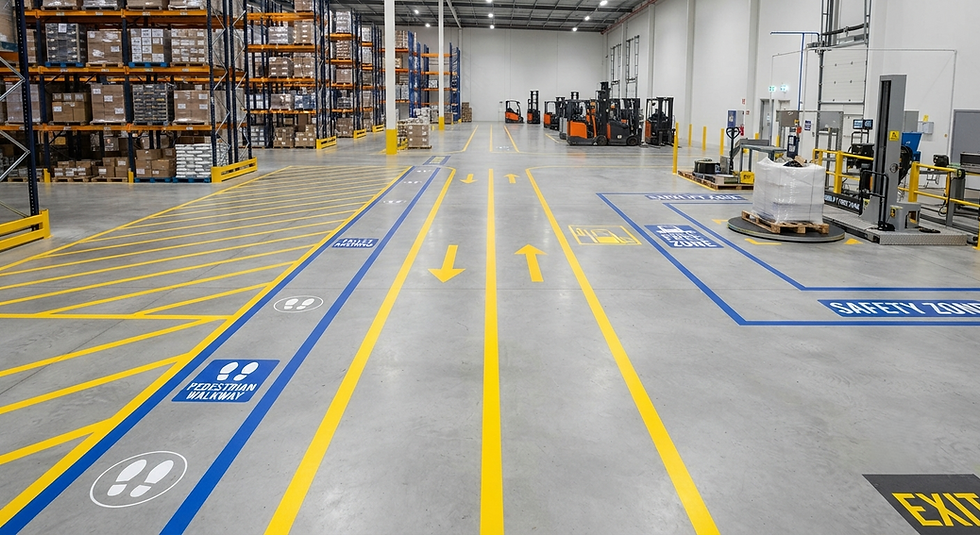
For example, in a busy warehouse, clear yellow lines can separate pedestrian paths from forklift routes, preventing collisions. Red markings might indicate fire exits or emergency equipment locations, ensuring quick access when needed.

How to Implement UK Compliant Floor Marking
Implementing floor marking that meets UK standards involves several key steps. Here’s a practical approach you can follow:
Assess Your Facility
Walk through your workspace and identify areas that need marking. Consider pedestrian routes, vehicle lanes, storage zones, and hazard areas.
Choose the Right Materials
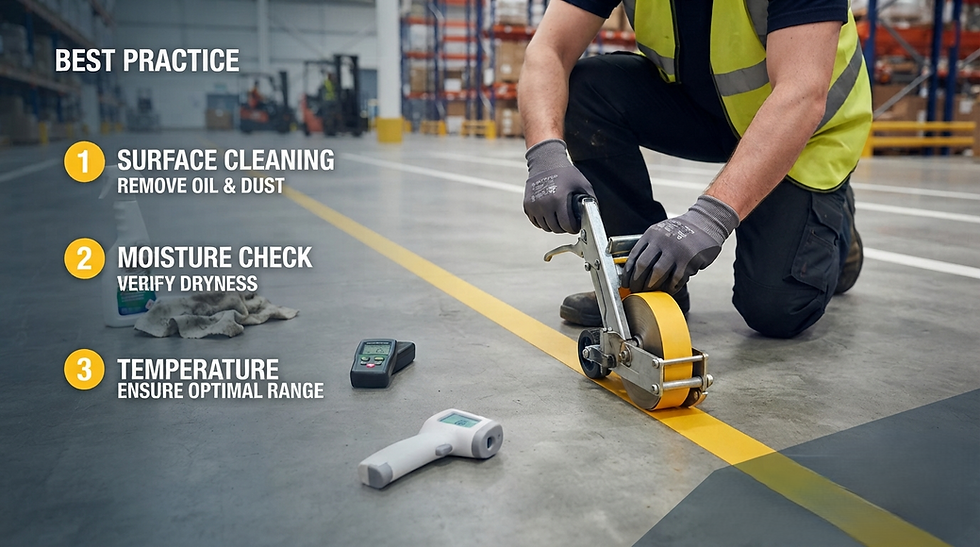
Use durable, non-slip paints or tapes designed for industrial environments. The materials should withstand heavy foot traffic, machinery, and cleaning processes.
Follow Colour Codes and Standards
The HSE recommends specific colours for different purposes:
Yellow for aisle ways and traffic routes.
Red for fire equipment and emergency areas.
Green for safety equipment and first aid.
Blue for mandatory instructions.
Plan the Layout
Design a clear, logical floor marking layout. Avoid clutter and ensure markings are visible from all necessary angles.
Train Your Team
Educate employees about the meaning of each marking and the importance of following them.
Maintain Regularly
Inspect floor markings frequently and refresh them as needed to keep visibility high.
By following these steps, you create a safer and more efficient environment that aligns with UK regulations.
What is the HSE Floor Marking?
The Health and Safety Executive (HSE) provides guidelines to help businesses maintain safe workplaces. While the HSE does not have a strict legal standard for floor marking colours, it strongly recommends best practices to reduce risks.
HSE floor marking focuses on:
Defining safe walkways to separate pedestrians from vehicles.
Highlighting hazards such as machinery, storage racks, or spill-prone areas.
Marking emergency routes and equipment for quick access.
Supporting 5S and lean manufacturing principles by organising space visually.
The HSE encourages businesses to adopt a consistent colour scheme and clear signage to avoid confusion. This approach helps prevent accidents and supports compliance with the Health and Safety at Work Act 1974.
For example, a manufacturing plant might use yellow lines to mark forklift lanes and green zones for first aid stations, making it easy for everyone to understand the layout at a glance.
Benefits of Using Professional Floor Marking Services
While some businesses attempt DIY floor marking, professional services offer significant advantages:
Expertise in compliance: Professionals understand the latest HSE guidelines and industry best practices.
High-quality materials: They use durable, slip-resistant paints and tapes suited for your environment.
Minimal disruption: Experienced teams work efficiently to reduce downtime.
Custom solutions: Tailored layouts that fit your specific operational needs.
Long-term maintenance plans: Ensuring your markings stay clear and effective.
Investing in professional floor marking can save you money in the long run by reducing accidents, improving workflow, and avoiding regulatory penalties.

How 5S Industrial Flooring LTD Supports Your Compliance Goals
At 5S Industrial Flooring LTD, we specialise in helping businesses across the UK achieve and maintain hse compliant floor marking uk. Our approach is designed to boost workplace safety and efficiency with minimal disruption.
We offer:
Comprehensive site assessments to identify your floor marking needs.
Customised floor marking plans aligned with HSE recommendations.
Use of premium materials that last in demanding industrial settings.
Flexible scheduling to fit your operational hours.
Ongoing support and maintenance to keep your facility compliant.
Our goal is to be your trusted partner in creating a safer, more organised workplace that supports your business growth.
Taking the Next Step Towards a Safer Workplace
Implementing UK compliant floor marking is a straightforward yet powerful way to improve safety and efficiency. By following HSE guidelines and using professional services, you can:
Reduce workplace accidents.
Streamline operations.
Ensure legal compliance.
Support lean manufacturing initiatives.
If you want to enhance your facility’s safety and organisation, start by assessing your current floor marking and planning improvements. Remember, clear and consistent markings make a big difference in everyday operations.
For expert advice and reliable installation, consider partnering with specialists like 5S Industrial Flooring LTD. Together, you can create a workplace that is safe, efficient, and ready for the future.

Comments